
 Book: Windmills of Essex, by Ian Yearsley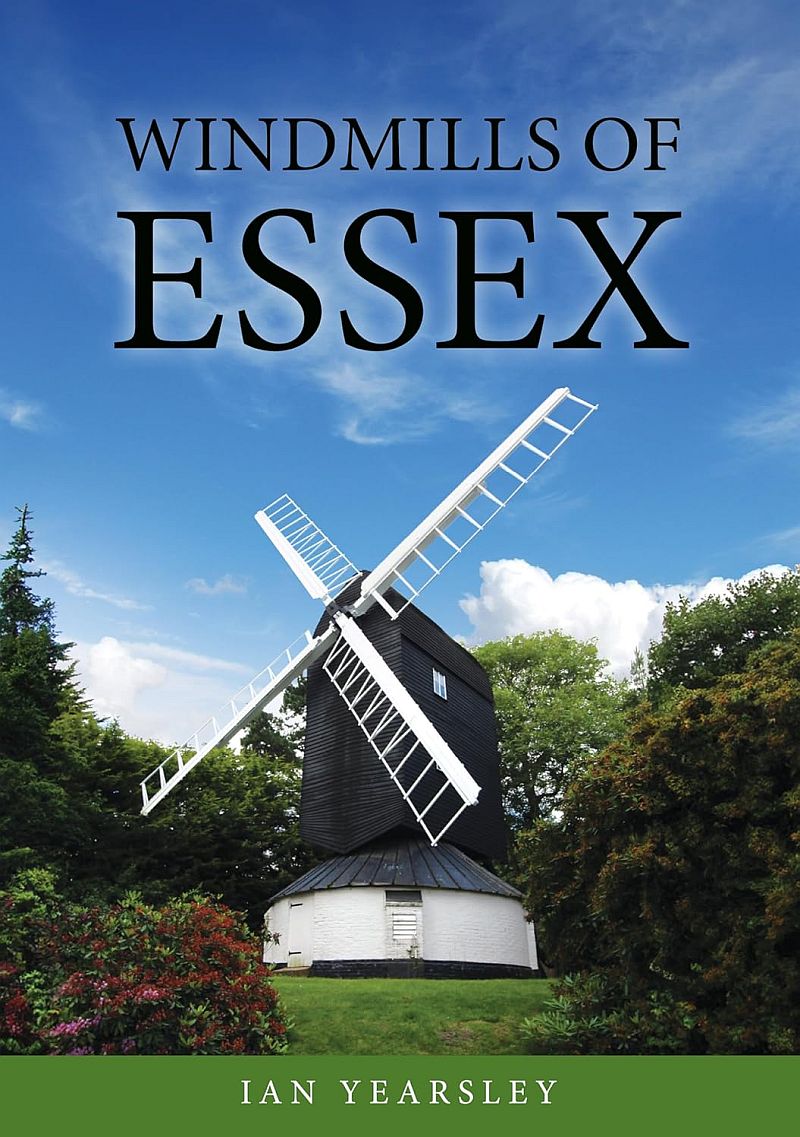
When you are writing a book about the mills of a particular area, especially when you make your local credentials clear in the preface, then you set an expectation that you have done your due diligence by making a recent visit to those mills. Thus Ian Yearsley's book, Windmills of Essex sets a strong first impression, by making the cover photo a glorious picture of Fryerning post mill, a mill that is rarely photographed, since it's hidden away in a private garden, not easily visible from outside the property. However, there's no mention inside the book of which mill it is that has pride of place on the cover, nor of the 2 mills pictured on the rear cover, that between them cover the three main mill types, post, smock and tower. In some respects it's no loss that the cover mills are not identified, since these images are not unique - they are repeated inside the book on the pages about the mills they illustrate, but I do feel that that is a missed opportunity - rather than repeat the one Fryerning image already shown on the cover, why not include a different image inside, since it's clear the author had close up access to the mill that few of the book's readers are likely to achieve. Whilst the approach adopted for the surviving windmills of including one recent, and one historic photo is a good one, overall, I feel that the photographs chosen to illustrate the mills throughout the book are a little bit of a let down, The recent photo of Baker Street Mills, Orsett is really a photo of a fence post, with a small windmill visible in the background, and several other photos would have benefited from an alternative angle that avoided obscuring the mill with so much foliage.
As well as "surviving windmills" (which roughly equates to extant full height mills, with or without sails, including conversions), there's a shorter section covering "some lost windmills", which actually mostly covers mills that survive in a truncated (and often converted) form, rather than ones that are truly lost to history. It is notable that in neither section are there any interior photos of the windmills - the closest we get to seeing anything relating to the actual machinery of windmills is the appearance of millstones that have been relocated outside the mills as garden ornaments.
The text that describes each mill is a mixture of a potted history of the mill (this is a lightweight popular history book, so none of the facts are backup up with citations), together with some recent information about recent and (at time of publication) current owners and sometimes their plans for the mill. This I feel is a strong feature of the book, showing that the author has been in contact with many of the mill owners in the course of researching the book, and providing information that the heavyweight historical coverage of the county in Farries is of course unable to provide.
Finally, I should point out that the final very short chapter on modern windmills alerted me to an Essex windmill I'd not come across before - the reduced scale windmill being built on Ashley Cooper's farm in Gestingthorpe. Although there are only 3 sentences about the mill, it does get a March 2025 photo, showing the progress that has been made in the build at that point.
| Last generated 15/09/2026 | Text and images © Mark Berry, 1997-2026 - |