
London is a fairly flexible term - the mills listed here are all within the current borders of the London boroughs, though a number were historically included in other counties.
| # | photo | id | name | location | type | condition | maps |
|---|---|---|---|---|---|---|---|
| 1 |  |
#2594 | Barnet Gate Mill | Arkley | Tower mill | Restored appearance, with 4 sails. Not open to the public. As of the 2020's increasingly showing signs of lack of maintenance, such as a missing fantail. |
NGR:
TQ217953
(51.64319,-0.2422)
|
| 2 |  |
#2617 | Ashby's Mill | Brixton | Tower mill | Subject to an extensive restoration in early 2011 and now regularly open to the public. New visitor centre constructed 2019-2020. |
NGR:
TQ304744
(51.45321,-0.1238)
|
| 3 |  |
#2618 | Sorocold's Mill | Clerkenwell | Tower mill | truncated tower, within the former waterworks site, which has now become the Quentin Blake Centre for Illustration. |
NGR:
TQ312827
(51.52850,-0.1094)
|
| 4 |  |
#2643 | Erith | Post mill | part of the roundhouse wall, incorporated into a general boundary wall |
NGR:
TQ502772
(51.47365,0.16051)
|
|
| 5 |  |
#2634 | Keston | Post mill | conserved, occasionally open to the public |
NGR:
TQ415641
(51.35769,0.03154)
|
|
| 6 |  |
#2612 | Mitcham Common | Hollow-post mill | bare trestle remains, previously deteriorating rapidly, but now stabilized |
NGR:
TQ292678
(51.39502,-0.1450)
|
|
| 7 |  |
#2638 | Common Mill | Plumstead | Tower mill | converted, providing accommodation above the Old Mill pub |
NGR:
TQ448779
(51.48171,0.08410)
|
| 8 |  |
#2624 | Shirley | Tower mill | restored and open to the public |
NGR:
TQ355651
(51.36887,-0.0548)
|
|
| 9 | 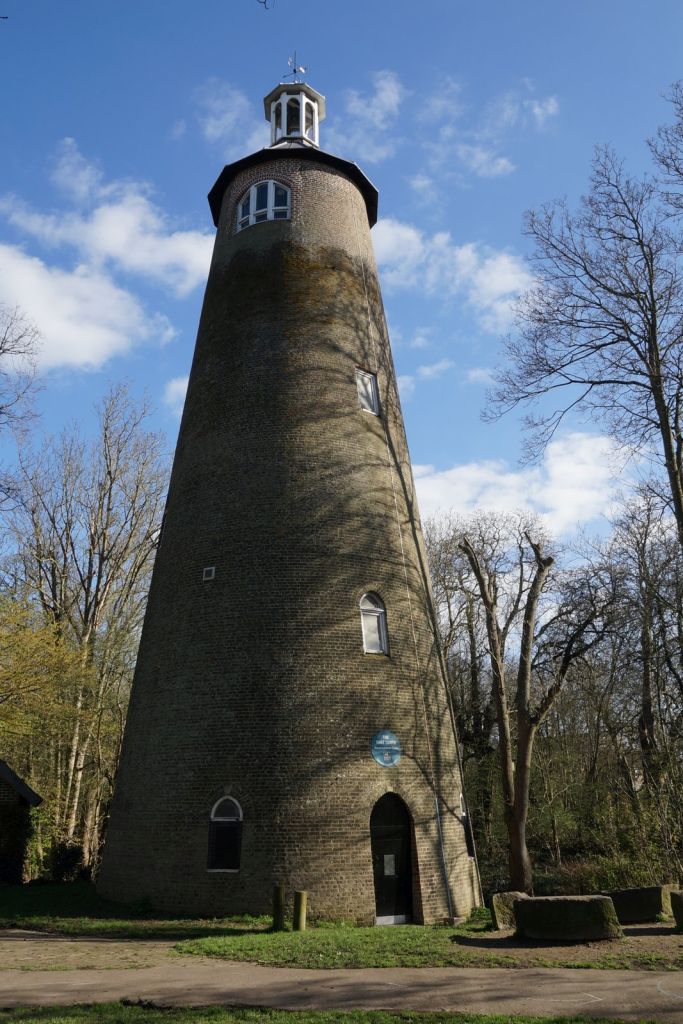 |
#2583 | Crane Park Mill | Twickenham | tower mill | Used as a nature and visitor centre by the London Wildlife Trust |
NGR:
TQ129729
(51.44333,-0.3770)
|
| 10 |  |
#2653 | Upminster Windmill | Upminster | Smock mill | Restored to working order in 2016-2022, and since 2023 open to the public for tours 1 weekend a month. |
NGR:
TQ557868
(51.55790,0.24507)
|
| 11 |  |
#2606 | Common Mill | Wandsworth | Smock mill | small mill, for pumping - no sails remaining |
(51.45499,-0.1763)
|
| 12 |  |
#2598 | Wimbledon Windmill | Wimbledon | smock mill (previously hollow post mill) | Much altered from its working appearance. Now a milling museum and regularly open. |
NGR:
TQ230725
(51.43762,-0.2316)
|
This table is selective, and probably far from comprehensive.
| # | photo | id | name | location | type | condition | maps |
|---|---|---|---|---|---|---|---|
| 1 | 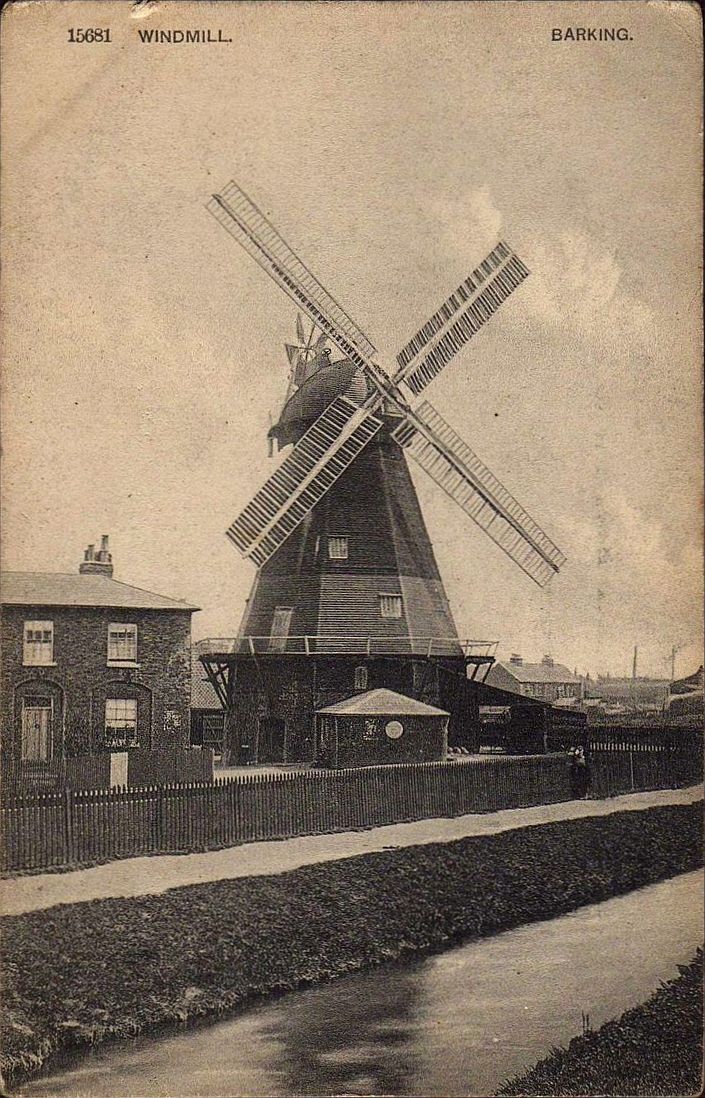 |
#11466 | Wellington Mill | Barking | Smock mill |
(51.53574,0.06905)
(approximate location)
|
|
| 2 |
no image |
#11432 | Barnes | open trestle post mill |
(51.46997,-0.2401)
(approximate location)
|
||
| 3 |
no image |
Details[print] |
|||||
| 4 |  |
#11433 | Fowlers Mill | Battersea | horizontal mill |
(51.47745,-0.1730)
(approximate location)
|
|
| 5 | 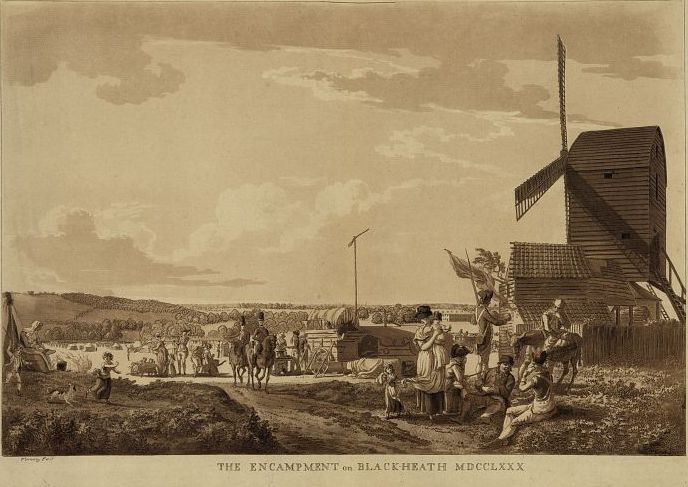 |
#10707 | East Mill | Blackheath | Post mill | ||
| 6 |
no image |
#11457 | Brixton Hill Mill | Brixton Hill | smock mill |
(51.44739,-0.1261)
(approximate location)
|
|
| 7 |
no image |
||||||
| 8 | 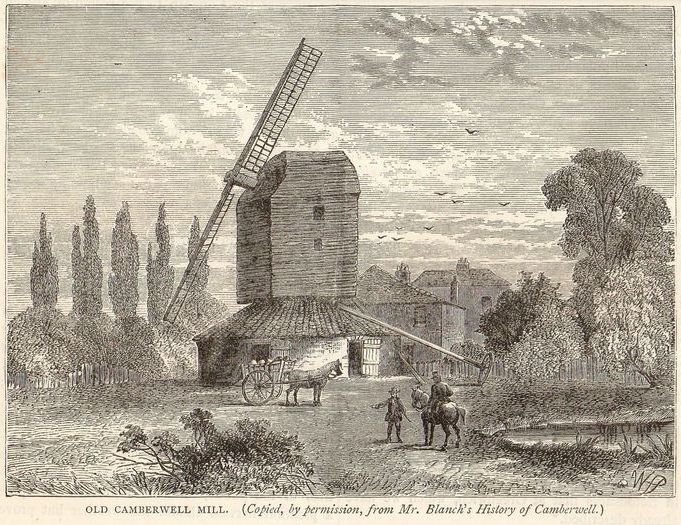 |
#11465 | Freeman's Mill | Camberwell | post mill |
(51.48099,-0.0961)
(approximate location)
|
|
| 9 |  |
#11463 | Dovedale Manor Mill | Camberwell | tower mill |
(51.48080,-0.0846)
(approximate location)
|
|
| 10 |
no image |
#11439 | Bree Kill mill | Dulwich | Post mill |
(51.44211,-0.0833)
(approximate location)
|
|
| 11 | 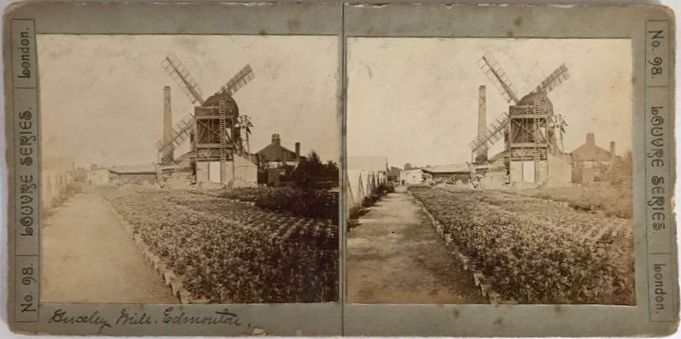 |
#11525 | Huxley Mill | Edmonton | post mill |
(51.61889,-0.0807)
(approximate location)
|
|
| 12 | 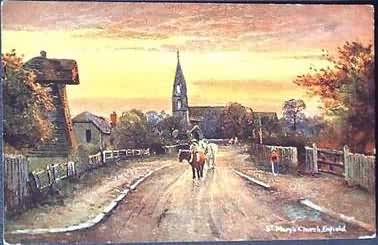 |
#12209 | Enfield Windmill | Enfield | smock mill |
NGR:
TQ318967
(51.65301,-0.0977)
(approximate location)
|
|
| 13 |
no image |
Details[image] |
|||||
| 14 |
no image |
#x2 | Dalston Mill | Hackney | vertical axis mill, constructed from scaffolding poles, as an art project | only temporary installation in summer 2009, dismantled after a few weeks |
(51.54656,-0.0741)
|
| 15 |
no image |
DetailsA very short lived mill - burnt down after just a few days Gloucester Journal, 14 January 1735 A new Windmill near Hackney-Marsh, which cost the Owner about 400l. building, and which had been at work there about 3 or 4 Days, took fire last Week, and was entirely consumed. |
|||||
| 16 |
no image |
DetailsThomas Perry occupied it in 1734 A windmill existed in 1630: The history and antiquities of Enfield, in the county of Middlesex by William Robinson, 1823 In the survey of 1630, among other cottages presented by the Jury, in answer to the 27th article of the Commission, to be built within the said manor and Chase, within 20 years, contrary to the statute, are the following: ... "A cottage erected by William Pavey, alias Hale, in the said Chase near Hadley windmill, wherein he dwelleth, and keepeth victualling, without leave, it being a hole wherein he formerly used to sit and beg in."[Old Bailey murder trail, 10th July 1734] |
|||||
| 17 |
no image |
#12289 | Mitchell's Mill | Hornchurch | post mill |
(51.55852,0.22550)
(approximate location)
|
|
| 18 |
no image |
New Cattle Market | windmill pump | DetailsMechanics Magazine, no. 720, May 27, 1837
|
|||
| 19 |
no image |
Mill Row | smock mill | Details
Morning Herald (London), 26 April 1827 To MILLERS, FLOUR FACTORS, MEALMEN, and OTHERS.- CAPITAL WINDMILL, large Shed, DWELLING HOUSE, &c., KINGSLAND.- By Messrs. FAREBROTHER, WILSON, and LYE, at Garraway's, on Friday, May 4, at Twelve, in One Lot, late the Property of Mr. Charles Harland, deceased, |
|||
| 20 |
no image |
#11444 | Apothecaries | Lambeth | Tower mill |
(51.49517,-0.1118)
(approximate location)
|
|
| 21 |
no image |
Details
Maidstone Gazette, 9 April 1816 Early on Tuesday morning, between 20 and 30 persons assembled round a wind-mill standing on a piece of open ground on the north side of the New-cut, Lambeth-marsh, the lease of which having expired, it remains at present unoccupied; and, commencing a general attack upon the building, proceeded to demolish it at a very rapid rate; the mob continued to increase, and by ten o'clock more than 300 persons had assembled. The scene of devastation and plunder which was row presented to the spectators was truly serious. Some of these misguided people, who had taken up the erroneous opinion, that because the lease had expired the materials of the building had become common property, had obtained possession of the upper part of the mill, and were throwing down planks, &c. to those below, who regardless of the danger to which they were exposed, were maintaining a brisk combat to secure their plunder. Mr. Sellon, the Magistrate, having received information of what was going forward, proceeded to the spot with several officers, and succeeded in securing several of the most active, and dispersing the rest. On enquiry, it appeared, that Mr. Lee, an attorney in the Borough, is the ground landlord of the mill, and had placed a man on the premises to take care of the property; but this man was overpowered, and driven from his post by the mob. Scarcely any part of the mill except the brick-work and main beams is left standing. Six men were ordered to find bail to answer the complaint preferred against them at the Sessions. |
|||||
| 22 |
no image |
Silk Mills | skeleton wind pump | DetailsAn engraving of the Lewisham silk mills shows 2 skeleton wind pumps along the river bank, presumably part of works to manage the water supply for the silk mills, where the river has likely been artificially diverted at this point. |
|||
| 23 |
no image |
DetailsThe History of the Royal Society of Arts, Henry Trueman Wood, 1913 The first substitution of mechanical power for handwork in the timber trade in England is certainly due to the Society. A premium for a saw-mill was awarded to James Stansfield in 1761, and sums amounting in all to over £300 were given to him to help him in improving and working his mill. By the instrumentality of the Society Stansfield was also introduced to one Charles Dingley, who found the capital for setting up a mill at Limehouse which was driven by wind-power. This mill, after working a short time, suffered the usual fate of all mechanical improvements, and was destroyed by a mob, but the owner was compensated, the rioters punished, and the mill reinstated. For his services in the matter, a gold medal was awarded to Dingley. The backward state of English industry is shown by the fact that saw-mills worked by water and by wind had previously been in existence on the Continent, and even in America, though there seems reason to believe that Stansfield's was an improvement on the older types. |
|||||
| 24 |
no image |
post mill | Details[image] |
||||
| 25 |
no image |
Details[history] |
|||||
| 26 |
no image |
#11430 | Mitcham Horizontal mill | Mitcham | Horizontal windmill | ||
| 27 | 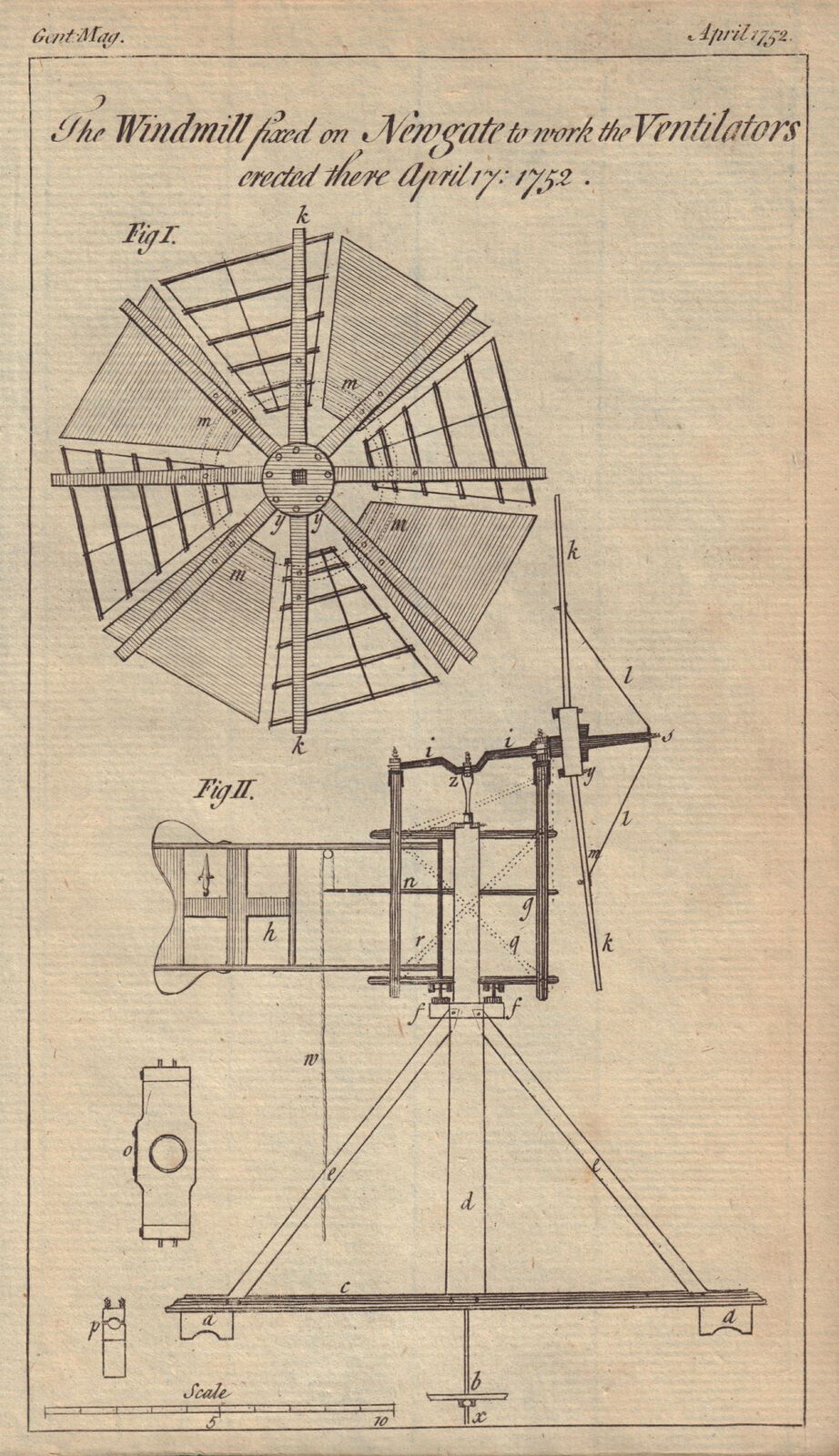 |
#11437 | Newgate Prison Mill | Newgate Prison | hollow post |
(51.51617,-0.1033)
(approximate location)
|
|
| 28 |
no image |
#11441 | Randall's Mill | Nine Elms | Tower mill |
(51.48422,-0.1291)
(approximate location)
|
|
| 29 |
no image |
#extra30 | Winstanley's mathematical water-theatre | Piccadilly | |||
| 30 |
no image |
post mill | DetailsChelmsford Chronicle, 14 January 1859 To Millers and Others. |
||||
| 31 |
no image |
#12683 | Pigeon Mills | Stratford | Smock mill | ||
| 32 |
no image |
#12583 | Sydenham | Post mill |
(51.43116,-0.0622)
(approximate location)
|
||
| 33 |
no image |
#12670 | Walthamstow | post mill |
| Last generated 30/06/2026 | Text and images © Mark Berry, 1997-2026 - |
 (
(


